
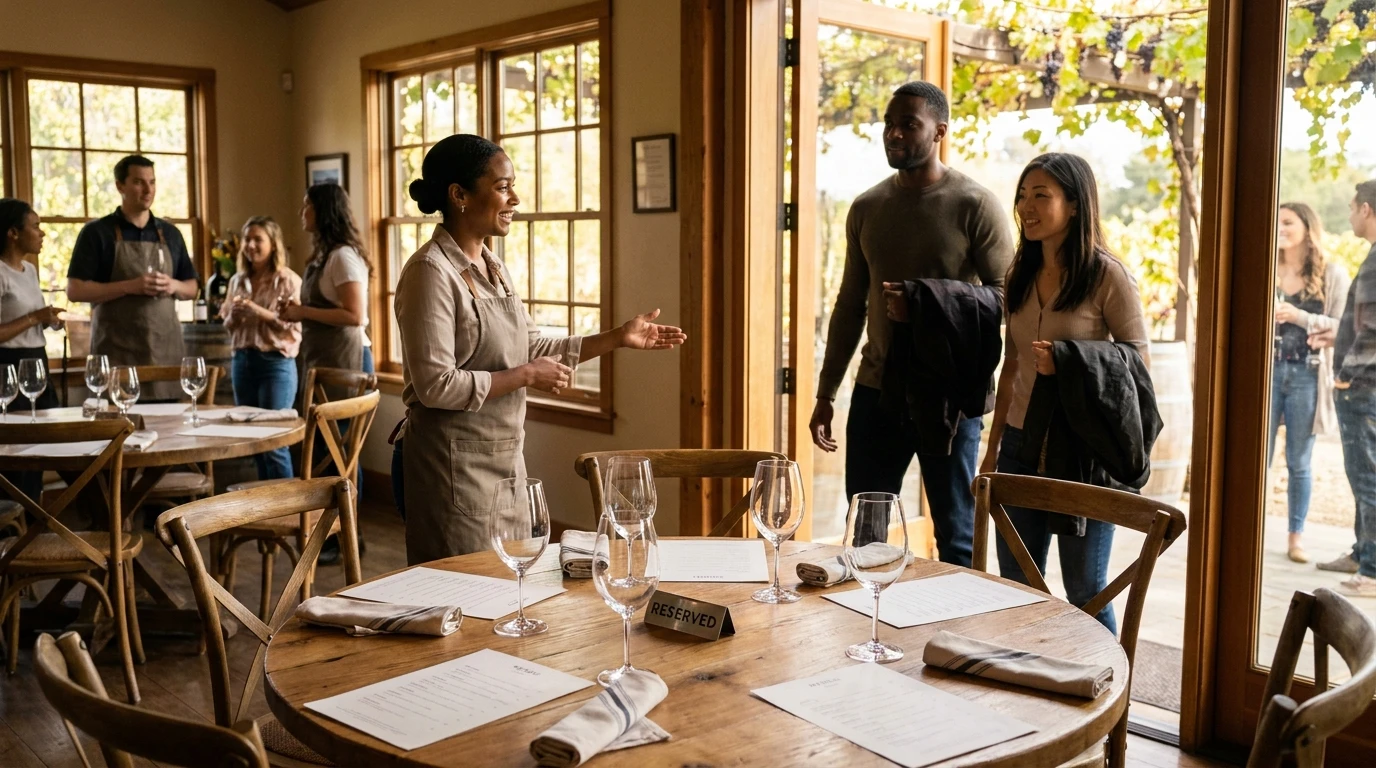
Walk-ins and reservations are often presented as opposing philosophies. They do not need to be. A good tasting-room policy can protect spontaneity for guests who want to explore while also giving planning-focused guests confidence that their trip will work.
For a guest traveling to Paso Robles, Napa, Sonoma, Walla Walla, or another wine region, reservations are not just convenience. They are a way to protect a planned day. If someone spent money on travel and has favorite brands they want to visit, arriving to find every table taken by a large party can turn a special trip into a compromise.
At the same time, walk-ins matter. Discovery is part of wine travel. A guest may see a sign, get a recommendation at lunch, or decide on a whim to stop somewhere new. A venue that only accepts reservations can lose that energy.
The practical answer is to offer both.
Start With A Split Inventory Model
If the tasting room has 10 usable tables, do not assume all 10 need to be bookable online on day one. Start with a partial allocation.
A simple first version might be:
- 5 tables reservable online
- 5 tables held for walk-ins
- Premium experiences available by reservation only
- Large groups routed to staff review
Then adjust the split after a few weeks of real traffic. If reservable tables sell out early and walk-in tables sit empty, move more inventory online. If locals depend on spontaneous visits and reservations are crowding them out, hold more space for walk-ins.
The right split is not ideological. It is operational.
Let Unused Reservation Tables Become Walk-In Tables
A reservable table is not locked away forever. If a table is open during service and no reservation is coming soon, seat a walk-in there.
The important step is to mark that table as occupied in the reservation system so online availability changes immediately. If the guest is seated at 2:00 p.m. and will likely stay for an hour, that table should not still appear as available online for 2:15 p.m. or 2:30 p.m.
This is where dynamic inventory matters. The system should reflect the room as it is actually being used, not as it looked when the day started.
Use Reservations To Protect Planned Visits
Reservations are valuable because they make a promise: if the guest arrives at the planned time, the venue is prepared for them.
That promise matters most for:
- Out-of-town guests building a full itinerary
- Club members planning release weekend visits
- Guests celebrating birthdays, anniversaries, or proposals
- Small groups coordinating transportation
- Visitors who have a short window before dinner or another tasting
For these guests, a reservation does not remove joy from the visit. It removes uncertainty.
Keep Walk-Ins For Discovery
Walk-ins are valuable because they reduce friction. They let guests follow recommendations, weather, mood, or curiosity.
Protecting walk-in space can help with:
- Local guests who do not plan every visit
- Tourists exploring between scheduled stops
- Guests who finish another tasting early
- Patio or bar seating that works best casually
- Slower weekdays where strict reservations would feel cold
The staff script matters. Walk-ins should feel welcome, not like they failed to follow a rule.
Make Premium Experiences Reservation-Only
Some experiences are hard to sell well on a walk-in basis. Cellar tastings, vineyard tours, library tastings, food pairings, blending sessions, and private tastings often need preparation and staffing.
These should usually be reservation-only because the venue needs to plan for demand.
Reservation-only premium experiences can also increase revenue. They give guests a clear reason to book ahead and give the team time to prepare higher-value hospitality instead of improvising during service.
Watch The Right Signals
Do not judge the policy only by whether every table was full. Look at guest and staff outcomes:
- How often are reserved guests seated late?
- How often are walk-ins turned away?
- Which times create host stand pressure?
- Are premium reservations profitable and smooth?
- Are staff using the system to mark seated walk-ins?
- Are guests confused about what requires a reservation?
Use those signals to tune inventory. A healthy policy can change by season, day of week, release weekend, weather, or staffing level.
Where CoverCount Fits
CoverCount is designed for mixed reservation and walk-in operations. Venues can sell planned visits online, keep space for walk-ins, seat walk-in guests during service, and protect dynamic availability so online inventory reflects what is happening in the room.